
In Situ Collaborative Swarm of Drones: Advanced Swarming Algorithms for Disaster Management
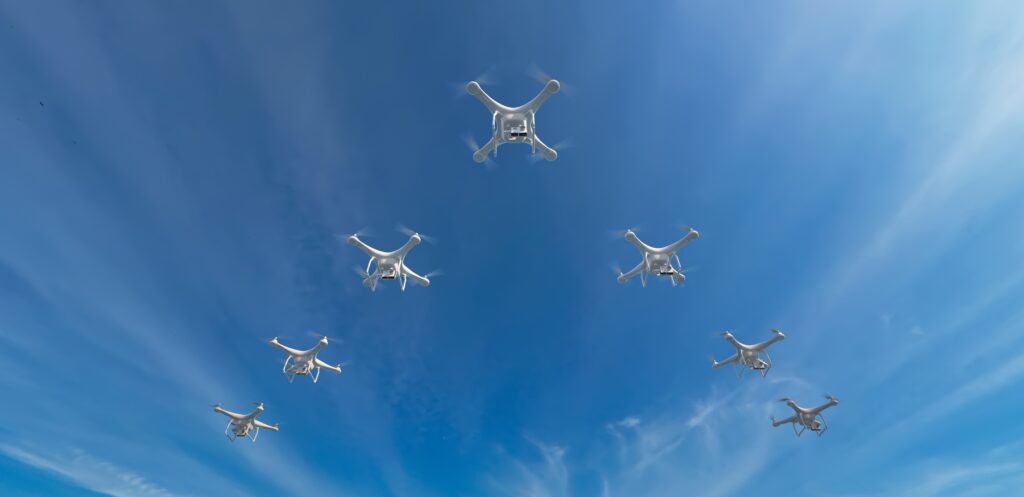
When a disaster strikes, getting “eyes in the sky” is critical for situational awareness. A single drone can provide a glimpse, but how do you effectively deploy an entire team of autonomous drones to scan a raging wildfire or a complex earthquake-damaged city?
This is the core challenge we are solving in PANTHEON. We recently completed a major milestone: Deliverable 6.1, “In Situ Collaborative Swarm of Drones.” This document is a “DEM” (Demonstrator), meaning it goes beyond pure theory to detail the actual design, implementation, and evaluation of our autonomous UAV swarm algorithms. It showcases three distinct, highly specialized methods for coordinating drone fleets, each tailored for a specific disaster scenario.
To make this advanced technical work more accessible, we have broken down this deliverable into a 5-part blog series. Each post explores a specific swarming strategy, from the core navigation framework to complex, energy-efficient coverage of disaster zones.
Explore the full series below.
Part 1: The PANTHEON Drone Vision
Start here to understand why we are using swarms, not just single drones, and how they integrate with our Smart City Digital Twin for training.
Part 2: The Core Swarming Algorithms
A deep dive into the three distinct methods we developed to manage the swarm, from basic navigation to advanced, large-area coverage.
- Blog Post 2: How Do Drones Fly Together? A Look at PANTHEON’s Swarm Navigation Framework
- Blog Post 3: Racing the Clock: Energy-Aware Path Planning for Efficient Drone Missions
- Blog Post 4: Divide and Conquer: Optimized Drone Coverage for Complex Disaster Zones
Part 3: From Code to Crisis Response
See how these technical frameworks are aligned with real-world needs, matching each algorithm to the specific PANTHEON use cases for wildfires, earthquakes, and cyber-attacks.
This series is based on the PANTHEON Project Deliverable D6.1. The project has received funding from the European Union’s Horizon Europe programme under Grant Agreement N°101074008.