
PANTHEON Tabletop Exercise tests Athens’ disaster resilience against massive Earthquake and Wildfire scenarios
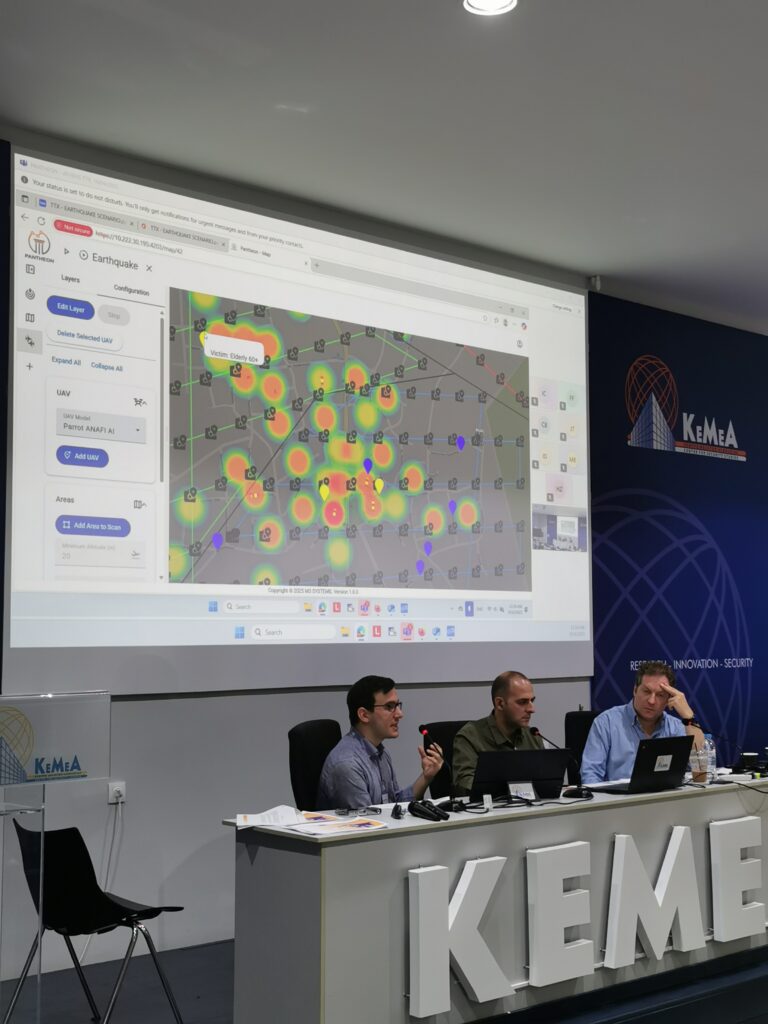
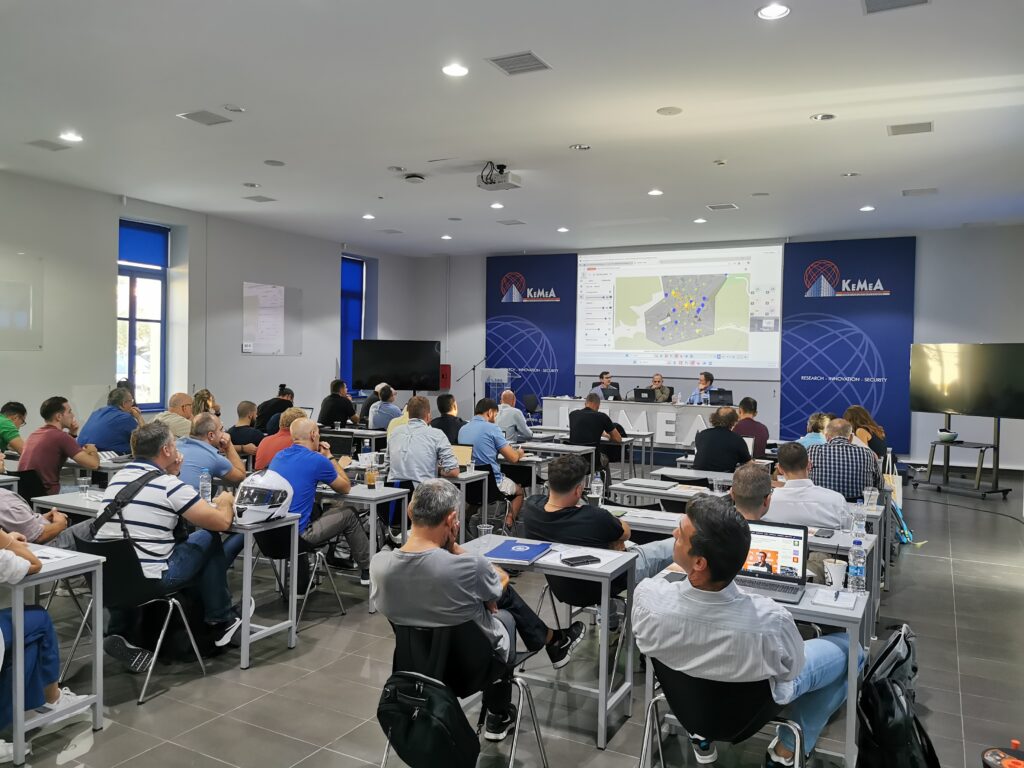
ATHENS, GREECE – The PANTHEON project, a European Union-funded initiative under the Horizon Europe programme , recently concluded a rigorous Tabletop Exercise (TTX) in Athens to stress-test disaster risk management (DRM) operations. The exercise focused on the application of a Community-Based Smart City Digital Twin Platform to enhance disaster resilience through two critical scenarios: a devastating earthquake and a fast-moving wildfire. The PANTHEON project aims to support the evelopment of emergency plans and serve as an early warning system using models and simulations based on large amounts of data. The scenarios were presented by speakers John Tsaloukidis and Nick Petropoulos.
Use Case 1: The Western Attica Earthquake Scenario
Use Case 1, titled “Planning and early warning according to simulations” , plunged the regional unit of Western Attica into a simulated disaster.
The Event
The scenario began on September 9th at 3:00 am with a strong, shallow earthquake. The event’s characteristics, announced shortly after by the Geodynamic Institute of the National Observatory of Athens (GEIN-NOA):
● Magnitude: 6.3 Richter (R)
● Epicenter: 38.08 N, 23.60 E, located a few kilometers northwest of Athens.
● Cause: An active fault on the southwestern slopes of Mount Parnitha.
● Impact: The earthquake was strongly felt across the Attica Region, parts of the
Peloponnese, Central Greece, Euboea Island, and the northwestern Cyclades. Its
shallow focal depth of 9.5 km led to severe damage and cascading effects.
Cascading Effects and Damage
The seismic event resulted in significant disruption to critical infrastructure:
● Transportation: Ground deformations severely damaged the railway. Landslides blocked the road to the military base at the peak of Mount Parnitha.
● Energy/Utilities: Natural gas stations and pipelines were damaged. Power shortages and telecommunications disruption occurred within a 40 km radius of the epicenter.
● Emergency Response: By 3:15 am, the 112-emergency call center began receiving reports of collapsed and heavily damaged buildings, prompting the dispatch of first responders.
Hellenic Police Operational Deployment (Earthquake)
The Hellenic Police’s immediate and long-term role was central to the TTX, beginning with gathering the initial situational picture (damage, victims, collapses) and feeding this crucial information into the national coordination chain.
Key police actions included:
● Traffic and Order: Establishing perimeters around dangerous structures to allow safe operation for Fire Service rescue teams and ambulances. Traffic Police imposed road closures, restrictions, and priority lanes to create emergency corridors and reroute flows.
● Evacuation Management: At 3:30 am, authorities decided on an organized preventive evacuation. Police were tasked with notifying residents, enforcing the decision, regulating traffic along evacuation routes, and preventing crimes like looting against evacuated property.
● Information and Technology: Issuing announcements to inform the public about road conditions and using drones to overfly affected zones and provide real-time information to mobile units.
● Recovery Phase: After the initial crisis, police would transition to guarding “red-tagged”
(unsafe) buildings and assisting other state services in recording damages.
Use Case 2: Wildfire at the NW of Athens
Use Case 2 focused on “First responders’ training” , utilizing the digital twin platform to facilitate cross-organizational training and improve mutual understanding during disaster response.
The Event
This scenario involved a wildfire northwest of Athens, specifically north of the town of Fyli.
● Initial Report: On September 15th at 3:00 pm, the 112-emergency call center received the first report of smoke near the St. Cyprianous Monastery from trekkers on Mount
Parnitha.
● Rapid Escalation: Although the fire initially affected a sparsely forested area, strong NNE winds prevailed, quickly threatening the Wildland Urban Interface (WUI) area of Fyli and nearby critical infrastructure.
● Citizen Reports: By 3:10 pm, Fyli residents began calling the 199-fire emergency call
center, indicating the fire was actively threatening the WUI.
Hellenic Police Operational Deployment (Wildfire)
The police response was tailored to the specific dynamics of a fire event, focusing on rapid access for fire engines and the safe execution of an evacuation.
Key police actions included:
● Traffic Management: Guided by dispatcher information or drone footage , Traffic Police immediately imposed road closures, diversions, and priority lanes to ensure unobstructed movement for fire engines and other emergency services.
● Evacuation Execution: An evacuation was ordered at 3:55 pm. Police played a major role in its execution by carrying out door-to-door notifications, controlling routes, assisting people moving to assembly points, and ensuring evacuation routes were kept clear.
● Safety and Security: Patrol units regulated access to the fire-affected area, maintained order around operations, and prevented unauthorized individuals like “selfie-seekers” from approaching. Mobile units were deployed to evacuated neighborhoods to deter looting and guard threatened property.
● Recovery: Once the fire was contained and extinguished (simulated at 10:25 pm), the police gradually lifted traffic measures and removed cordons in close coordination with the Fire Service and local authorities.
The PANTHEON TTX successfully tested the coordinated response mechanisms of Greek first responder organizations, highlighting the potential of the Smart City Digital Twin Platform to support crisis management across diverse, complex disaster scenarios.